


Marine coolers are essential equipment for anyone spending time on the water, whether it's for fishing, boating, or other marine activities. These coolers are designed to keep food and beverages cold in harsh marine environments, which means they need to be made from high-quality, durable materials. As a supplier of marine coolers, I have in - depth knowledge about the materials used in their construction. In this blog, I will explore the various materials that go into making marine coolers.
Outer Shell Materials
Rotomolded Plastic
One of the most common materials for the outer shell of marine coolers is rotomolded plastic. Rotomolding is a manufacturing process where plastic resin is placed in a mold, which is then heated and rotated. This causes the plastic to coat the inside of the mold evenly, creating a seamless, one - piece shell.
The advantages of rotomolded plastic are numerous. Firstly, it is extremely durable. It can withstand impacts from waves, bumps against the boat's hull, and accidental drops without cracking or breaking. This durability makes it ideal for the rough and tumble of marine use. Secondly, rotomolded plastic is resistant to corrosion and UV rays. The saltwater environment can be very corrosive, but rotomolded plastic shells are not affected by it. UV rays from the sun can also cause materials to degrade over time, but rotomolded plastic has good UV resistance, ensuring the cooler maintains its integrity for a long time.
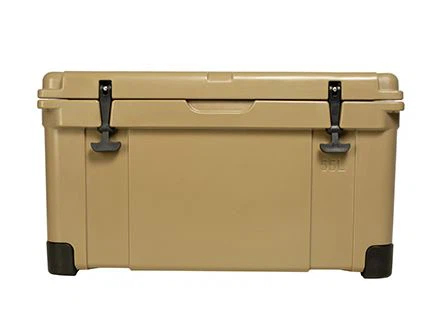
Many high - end marine coolers on the market, including our Hunting Coolers Hunting Coolers, Fishing Coolers Fishing Coolers, and Camping Coolers Camping Coolers, are made with rotomolded plastic outer shells.
Stainless Steel
Stainless steel is another material used for the outer shell of some marine coolers. Stainless steel offers excellent corrosion resistance, especially in saltwater environments. It is also very strong and can handle heavy use.
The sleek and modern appearance of stainless steel is a major selling point. It gives the cooler a high - end look that appeals to many consumers. However, stainless steel is heavier than rotomolded plastic, which can be a drawback if you need to carry the cooler around frequently. Also, stainless steel can conduct heat more easily than plastic, which means it may not be as good at insulating as a rotomolded plastic cooler.
Insulation Materials
Polyurethane Foam
Polyurethane foam is the most widely used insulation material in marine coolers. It is a closed - cell foam, which means that the cells in the foam are sealed off from each other. This structure makes it an excellent insulator because it traps air, which is a poor conductor of heat.

Polyurethane foam can be injected into the walls of the cooler during the manufacturing process. It conforms to the shape of the cooler, providing a continuous layer of insulation. The thickness of the foam can vary, but generally, thicker foam provides better insulation. High - quality marine coolers often have a thick layer of polyurethane foam insulation, which can keep ice frozen for several days, even in hot weather.
Expanded Polystyrene (EPS)
Expanded polystyrene is another type of insulation material. It is made up of small beads of polystyrene that are expanded and fused together. EPS is lightweight and has good insulating properties.
However, compared to polyurethane foam, EPS is not as durable. It can be more easily damaged if the cooler is dropped or subjected to rough handling. Also, EPS may not provide as long - lasting insulation as polyurethane foam. Some budget - friendly marine coolers may use EPS insulation to keep the cost down.
Lid and Seal Materials
Rubber Seals
Rubber seals are crucial for keeping the cold air inside the cooler and preventing warm air from entering. High - quality marine coolers use thick, durable rubber seals. These seals are designed to fit tightly around the lid of the cooler, creating an airtight and watertight seal.
Silicone rubber is a popular choice for seals because it is resistant to extreme temperatures, UV rays, and chemicals. It also has good flexibility, which allows it to form a tight seal even if the cooler is not perfectly level. The quality of the rubber seal can significantly affect the cooler's ability to keep things cold. A poor - quality seal can lead to rapid heat transfer and ice melting.
Hinges and Latches
The hinges and latches on a marine cooler are also important components. They need to be strong and durable to withstand repeated use. Stainless steel or heavy - duty plastic is often used for hinges and latches.
Stainless steel hinges and latches are corrosion - resistant, making them suitable for the marine environment. They can also support the weight of the lid without bending or breaking. Heavy - duty plastic hinges and latches are lighter and more affordable, but they may not be as strong as stainless steel in the long run.
Handles and Wheels
Handles
The handles on a marine cooler should be comfortable to hold and strong enough to support the weight of the cooler when it is full. Many coolers use molded plastic handles that are integrated into the outer shell. These handles are often padded for comfort.
Some high - end coolers have adjustable or removable handles. Adjustable handles can be set at different heights to accommodate different users, while removable handles can be taken off when not in use to save space.
Wheels
Wheels are a great feature for larger marine coolers, as they make it easier to transport the cooler. The wheels should be large and sturdy, with good traction. Rubber - coated wheels are a popular choice because they can roll smoothly on different surfaces, including sand and gravel.
The axles of the wheels also need to be strong. Stainless steel axles are often used in marine coolers because they are corrosion - resistant. Some coolers have swivel wheels, which provide better maneuverability.
Conclusion
In conclusion, the materials used in marine coolers play a crucial role in their performance, durability, and overall quality. From the rotomolded plastic or stainless steel outer shell to the polyurethane foam insulation, rubber seals, and strong hinges and latches, each component is carefully selected to ensure the cooler can withstand the rigors of the marine environment and keep your food and drinks cold for as long as possible.
As a supplier of marine coolers, we are committed to using the best materials in our products. Our Hunting Coolers, Fishing Coolers, and Camping Coolers are designed with high - quality materials to meet the needs of our customers. Whether you are a professional fisherman, an avid boater, or someone who enjoys camping by the water, our coolers are built to last.
If you are interested in purchasing marine coolers for your next adventure, we invite you to contact us for more information and to discuss your specific requirements. We are always ready to assist you in finding the perfect cooler for your needs.
References
- "Cooler Insulation: A Comprehensive Guide." Cooler Review Magazine, 20XX.
- "Materials for Marine Equipment." Marine Technology Journal, 20XX.


